





Why Modern Leaders Still Struggle to Trust the Numbers.
In the age of the "Data-Driven Organization," we are told that numbers are the ultimate arbiter of truth. We have dashboards that update in real-time, predictive algorithms that anticipate customer whims, and enough storage to keep every click-stream ever generated. Yet, walk into any boardroom today, and you will find a familiar tension: the data says "A," but the CEO’s gut says "B."
More often than not, the gut wins.
According to various industry surveys, nearly two-thirds of executives still trust their intuition over data-driven insights when the two conflict. For a Business Analyst, this is the ultimate frustration. You’ve spent weeks cleaning datasets, running regressions, and building visualizations, only to have your findings dismissed because they don’t "feel right" to a stakeholder.
To bridge this gap, we have to understand why modern leaders still struggle to trust the numbers—and how the next generation of analysts can fix it.
[edit] 1. The "Black Box" Problem
Trust is built on transparency. One of the primary reasons leaders reject data is that they don't understand how the sausage is made. When an analyst presents a complex machine learning model or a convoluted SQL-driven forecast, it often feels like a "Black Box" to a leader who has spent 20 years in the industry.
If a leader cannot follow the logic, they cannot own the decision. To them, trusting a dashboard they don't understand feels like handing the keys of the company to an algorithm.
The Fix: Analysts must become "De-mystifiers." Instead of hiding behind technical complexity, you must be able to explain the "mechanics of the insight." If you can’t explain your model to a five-year-old (or a busy VP), you don’t understand it well enough yet.
[edit] 2. The Scar Tissue of "Bad Data"
Almost every veteran leader has a "horror story." They once made a massive investment based on a "data-driven" report, only to find out months later that the data was sampled incorrectly, or a decimal point was moved in a spreadsheet.
In the world of leadership, the cost of being wrong is high—reputational damage, lost capital, or even layoffs. In contrast, the "gut" is a synthesis of years of lived experience, pattern recognition, and emotional intelligence. When data is presented without a guarantee of integrity, leaders default to their "internal database" (intuition) because it has a proven track record of survival.
[edit] 3. Data Tells the "What," Intuition Explains the "Why"
Data is exceptionally good at describing the past and predicting the "what." It can tell you that sales are dropping in the Pacific Northwest. However, it often struggles to explain the "why" behind human behavior.
A leader’s intuition is often just a high-speed processing of "soft data"—the tone of a client’s voice, the morale in the office, or the subtle shift in a competitor's branding. Leaders struggle to trust numbers when the numbers ignore the human element.
"Data is the map, but intuition is the feeling of the wind on your face. You need the map to know where you are going, but you need the wind to know how to sail."
[edit] 4. Bridging the Gap: The Rise of the "Analytical Translator"
The friction between data and intuition is rarely a technical problem; it is a communication problem. This is why the role of the Business Analyst has evolved so rapidly. It is no longer enough to be a wizard with Python or a master of Excel. You must be an "Analytical Translator"—someone who can take the cold, hard numbers and wrap them in the warm context of business reality.
If you find yourself struggling to gain buy-in for your insights, it might be time to look beyond the software. Many professionals who are technically proficient but "influence-poor" find that a specialized business analytics course can provide the missing link. These programs have pivoted away from just teaching coding; they now focus heavily on strategic storytelling and stakeholder management. They teach you how to present data in a way that aligns with—rather than attacks—a leader’s intuition, making the numbers feel like an extension of their expertise rather than a replacement for it.
[edit] 5. The Confirmation Bias Trap
We must also be honest: sometimes leaders don't trust data because it contradicts their ego. Confirmation bias is a powerful force. If a leader has spent three years championing a new product, a dataset showing that the product is a failure feels like a personal threat.
In these cases, data isn't just "numbers"; it’s "bad news."
The Fix: Don’t just present the failure; present the "Pivot." Instead of saying, "The data shows your project is failing," say, "The data shows our customers are using the product in a way we didn't expect. If we shift our focus to this feature, we can capture a 20% larger market."
[edit] 6. Building a Culture of "Informed Intuition"
The goal of a modern organization shouldn't be to replace intuition with data. That leads to "analysis paralysis," where no one moves without a statistically significant p-value. Instead, the goal is Informed Intuition.
In this model:
- Data provides the guardrails and the baseline.
- Intuition provides the creative leaps and the strategic risks.
When these two work in harmony, you get companies like Netflix or Amazon—organizations that use data to optimize their current business but use intuition to bet on things data hasn't seen yet (like original content or cloud computing).
[edit] How to Win Trust in Your Next Presentation
If you want a leader to trust your numbers over their gut, follow this three-step checklist:
- Acknowledge the Intuition: Start by saying, "I know the general consensus is X..." This shows you aren't a robot and that you've considered the human context.
- Show the "Working": Briefly explain the data source and the logic. "We looked at three years of transaction history across 50,000 users..."
- Quantify the Risk: Intuition is often about risk management. "The data suggests that if we follow our current path, there is a 70% chance of hitting a bottleneck by Q3. However, this alternative path reduces that risk to 15%."
[edit] Summary: The Trust Spectrum
| Level | Leader's View | Analyst's Role |
| Low Trust | "The data is wrong/irrelevant." | Data Janitor (Cleaning & Reporting) |
| Medium Trust | "The data is interesting, but I'll decide." | Information Provider (Dashboards) |
| High Trust | "The data is my partner in strategy." | Strategic Partner (The Goal) |
[edit] Final Thoughts
Modern leaders don't struggle to trust numbers because they are "old-fashioned" or "anti-tech." They struggle because data is often presented as a cold replacement for their years of experience.
As a Business Analyst, your job is to make data the most powerful tool in their belt. When you stop treating data as a "gotcha" and start treating it as a "gps," you will find that the boardroom door swings wide open. The future belongs to those who can master the math, but speak the language of the soul.
Featured articles and news

We're expanding our collaborative mission by launching DB Intelligence, an exclusive market research advisory panel. Built environment professionals can now get paid to share their expertise on industry trends, products and services.
Panel members receive direct financial incentives for participating in research projects like short surveys, 1-2-1 interviews and focus groups. Register today to shape the future of the construction sector.
Building Control Independent Panel final report

A precis of a key report led by Dame Hackitt with full recommendations and link to the government response.
Guide to ISO 19650 for Architecture Firms (2026)
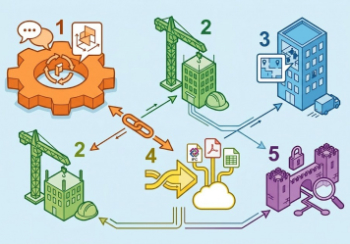
A user gives their low down.

A UK training and membership provider for mould remediation professionals.
Building Safety recap April, 2026

A short and longer run-through of the month, with links to further information and sources.

CIAT May 2026 briefing.

Independent NSI and BAFE study exploring how organisations are changing the way they buy fire safety services.

From medieval scribes to modern word art.

ECA welcomes crackdown on late payment and push for clean energy, whilst CIOB seek fixed cladding removal timeframes.
Cyber Security in the Built Environment

Protecting projects, data, and digital assets: A CIOB Academy TIS.
Managing competence in the built environment

ITFG publishes new industry guide on how to meet the ICC principles.
The UK's campaign to reduce noise pollution: Mythbusting, articles and topic guides.